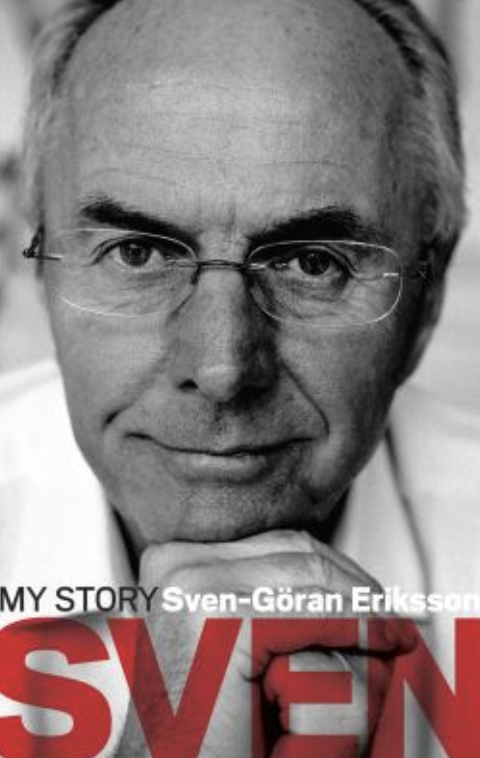
Sven: My Story
Few football managers have had their private lives dissected as thoroughly as Sven-Göran Eriksson, and few have remained so difficult to read. Through five tumultuous years as England manager he was permanently in the British tabloids, and permanently opaque. This book was an attempt to answer the question the coverage never did: who, precisely, is Sven?
His career spanned four decades and four continents. At 34 he took a largely amateur IFK Gothenburg side to a UEFA Cup title, one of the great upsets in the European game. League and cup titles followed at Benfica, Roma, and Lazio. In 2001 he became the first foreign manager of the England national team, reaching three consecutive major-tournament quarter-finals. Later came Manchester City, Mexico, Notts County, and the Ivory Coast.
The book moves through fake sheikhs, Italian courtrooms, and the financial collapse that cost him almost everything, but its real subject is quieter — a self-contained man from small-town Värmland who spent forty years never stopping to ask whether any of it had been worth it, and who, arriving at that question late, answers it honestly.
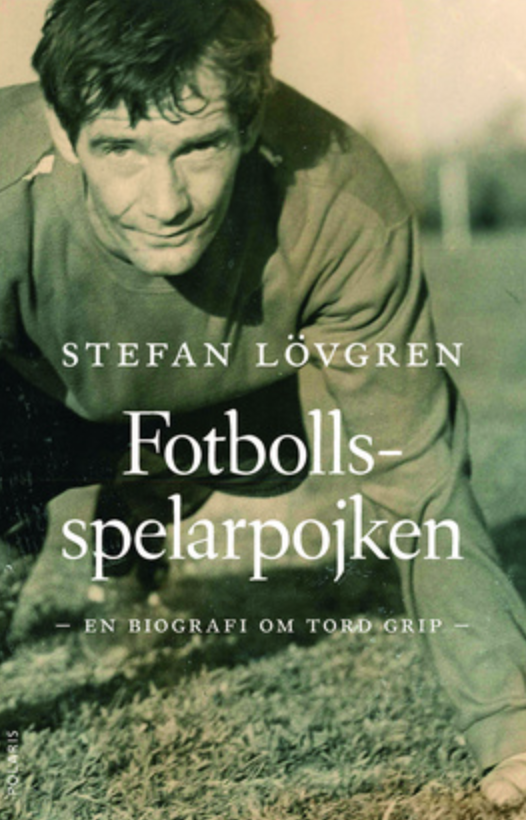 Swedish only
Fotbollsspelarpojken
Tord Grip spent most of his career half a step out of the spotlight, and was for decades one of the most respected figures in European football. Lazio, Manchester City, the Swedish and English national teams, the Ivory Coast, Kosovo — the list of teams reads like a map of the modern game. Roy Hodgson once said he would do anything for him. Sven-Göran Eriksson, whose right hand he was for years, simply called him the best.
The life behind that record is stranger than the CV suggests. Grip was born in 1938 in Ytterhogdal, a small community in Hälsingland, one of a large family in a place where the future was already decided: forestry was waiting. He wanted something else, and got it — first as a player for Sweden, then as a coach who ended up whispering in the ear of nearly every important manager he worked alongside.
This is a portrait of a football life lived largely in the second chair, and of the particular kind of influence that comes from having no interest whatsoever in being the story.
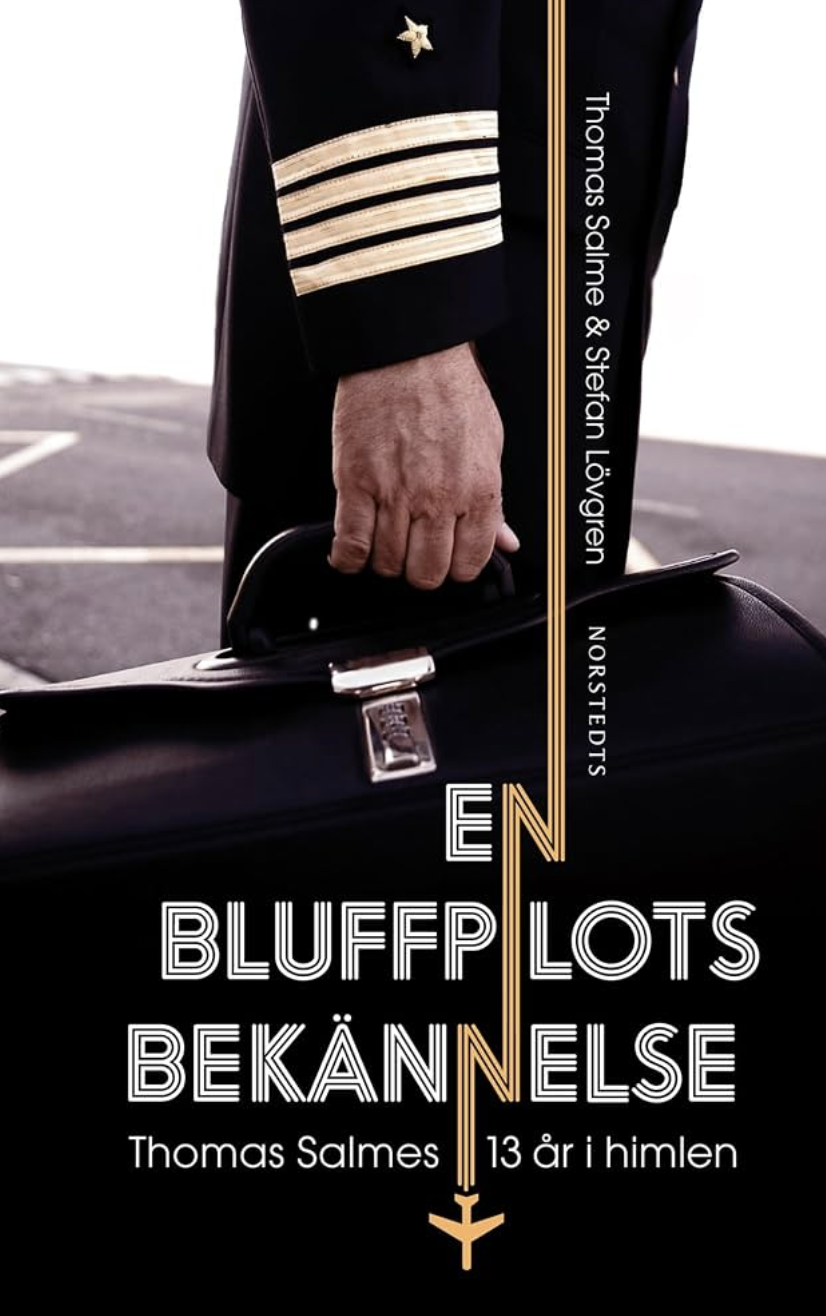 Swedish only
En bluffpilots bekännelse
In March 2010, Thomas Salme walked toward a gate at Schiphol airport outside Amsterdam, due to fly to Ankara for a Turkish carrier. Airport police were waiting. Behind him lay thirteen years in the cockpit, roughly ten thousand flight hours and seven hundred thousand passengers — all of it on a forged commercial pilot's licence.
Salme grew up in Jordbro, a suburb south of Stockholm, playing football and hockey and dreaming about aviation. He taught himself to fly on a home simulator, forged the paperwork, applied for a job, and was hired. What followed was one of the more improbable deceptions in European aviation.
The book tells that story, and then does something less expected. Roughly halfway through, it turns on itself, and becomes an account of what happened when the journalist commissioned to write the pilot's life story began checking it. The pursuit of the perfect story, it turns out, can slide easily into becoming part of somebody else's lie. Nothing here is quite what it appears, including the confession the title promises.