On May 1, 2005, a fisherman on the Mekong River in northern Thailand pulled in a giant catfish weighing 646 pounds. It was declared the largest freshwater fish ever recorded. Looking at a photograph of the catch, biologist Zeb Hogan asked a question that turned out to have no answer: was it actually the biggest?
No one had systematically tried to find out. Freshwater megafish — a scattered assemblage of catfish, stingrays, sturgeon, gars, sawfish and carp, some of them heavier than a grand piano — were among the least studied large animals on Earth, and among the most endangered. It is difficult to protect an animal nobody has counted.
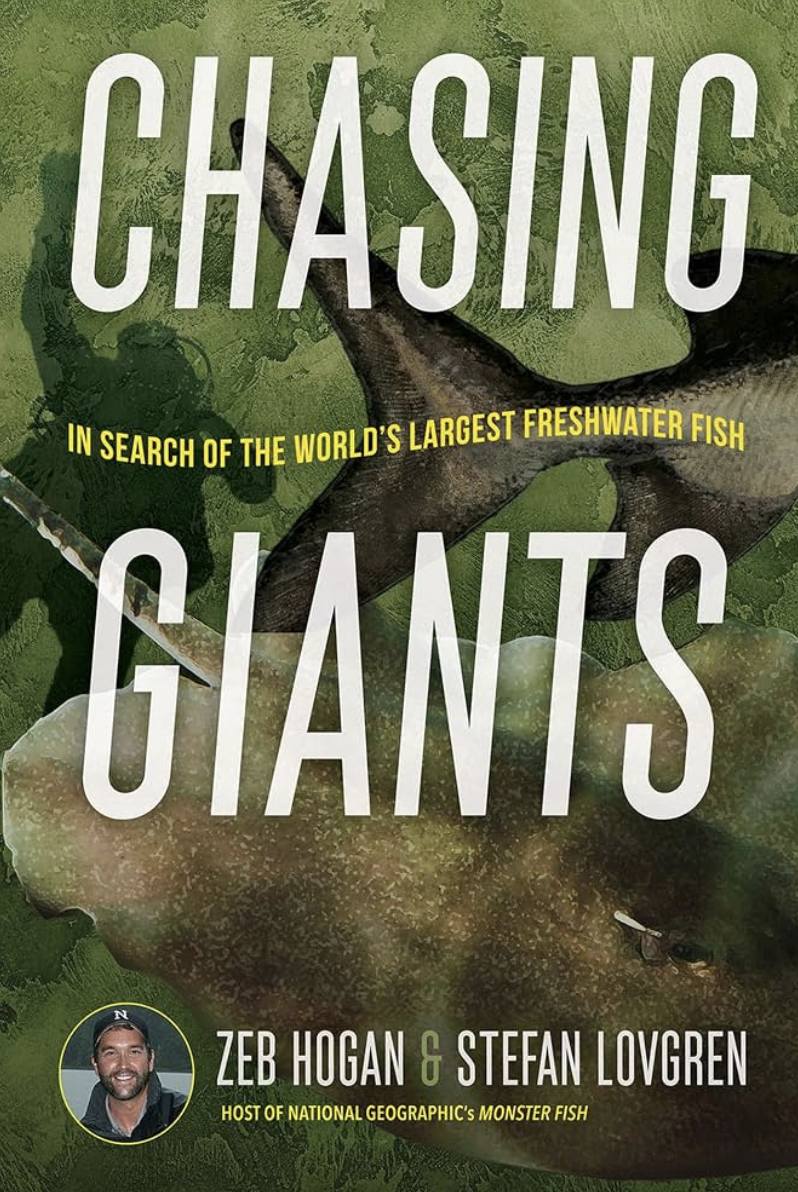
Chasing Giants is the account of the search that followed: a quarter-century pursuit that ran from the Amazon and the Pantanal to the rivers of Texas, the canals of France, the Australian tropics, the Mongolian steppe, and again and again back to the Mekong. It is a book about very large fish, and about the rivers that are running out of room for them.
The Megafishes Project
Hogan, a research biologist at the University of Nevada, Reno, and the United Nations Convention on Migratory Species scientific councilor for fish, launched the Megafishes Project to locate, study and protect the world's largest freshwater species. The collaboration behind the book began in Cambodia in 2006, and the reporting has since taken the authors to rivers and lakes on every continent except Antarctica.
The search brought them face to face with arapaima and piranha in the Amazon, alligator gar in Texas, pigeon-eating wels catfish in France, stingrays in Cambodia, and the gnarled-toothed sawfish of northern Australia. Some of that work was filmed for the National Geographic series Monster Fish. The book tells the rest of it.
Zeb Hogan releases a giant barb, Cambodia's national fish, back into the Mekong. Photo: Chhut Chheana
Canaries in the coal mine
The mystery at the center of the book turned out to be a way into a much larger story. Giant fish need what rivers used to reliably provide: long unobstructed migration routes, deep dry-season pools, flooded forests and wetlands to feed in, and enough years to grow. Take any of those away and the giants go first. Their decline is an early and unusually legible signal that a freshwater system is failing.
Those signals are now everywhere. Dams block migration routes and starve deltas of sediment. Sand mining hollows out riverbeds. Water is drawn off faster than it returns, pollution accumulates, floodplains are drained, and a warming climate scrambles the seasonal flood pulses that many species time their entire life cycle to. Freshwater ecosystems now number among the most degraded on the planet — and among the least researched. For every peer-reviewed study of a freshwater question, roughly twenty address a marine one.
A fisherman face to face with a giant carp.Zeb Hogan with a payara, better known as the vampire fish.
Closer to home
The story is not confined to distant rivers. The Colorado River, which shapes the water politics of the American West, was once home to the Colorado pikeminnow, a predatory giant that historical records describe reaching six feet in length. Fish of that size have not been seen in living memory. The book returns repeatedly to the American West — where both authors live and work — as a case study in what happens when a river is engineered, allocated and drawn down past the point its native species can absorb.
The Pantanal in Brazil, the largest tropical wetland on Earth and one of the great strongholds of freshwater biodiversity.
Reasons to keep going
The book is deliberately not a catalogue of losses. Dams are coming down and rivers are being reconnected. Community-managed fisheries in the Amazon have brought arapaima back from the edge. Protected deep pools on the Mekong are holding populations that had been written off. Conservation agreements are being built around the knowledge of the people who have fished these waters for generations. There are, it turns out, a great many people working to keep these systems alive, and their work is a substantial part of the story.
Swimming with an arapaima, an air-breathing Amazonian giant that can exceed nine feet.Stefan Lovgren filming a giant freshwater stingray in Thailand.
An answer, at the last possible moment
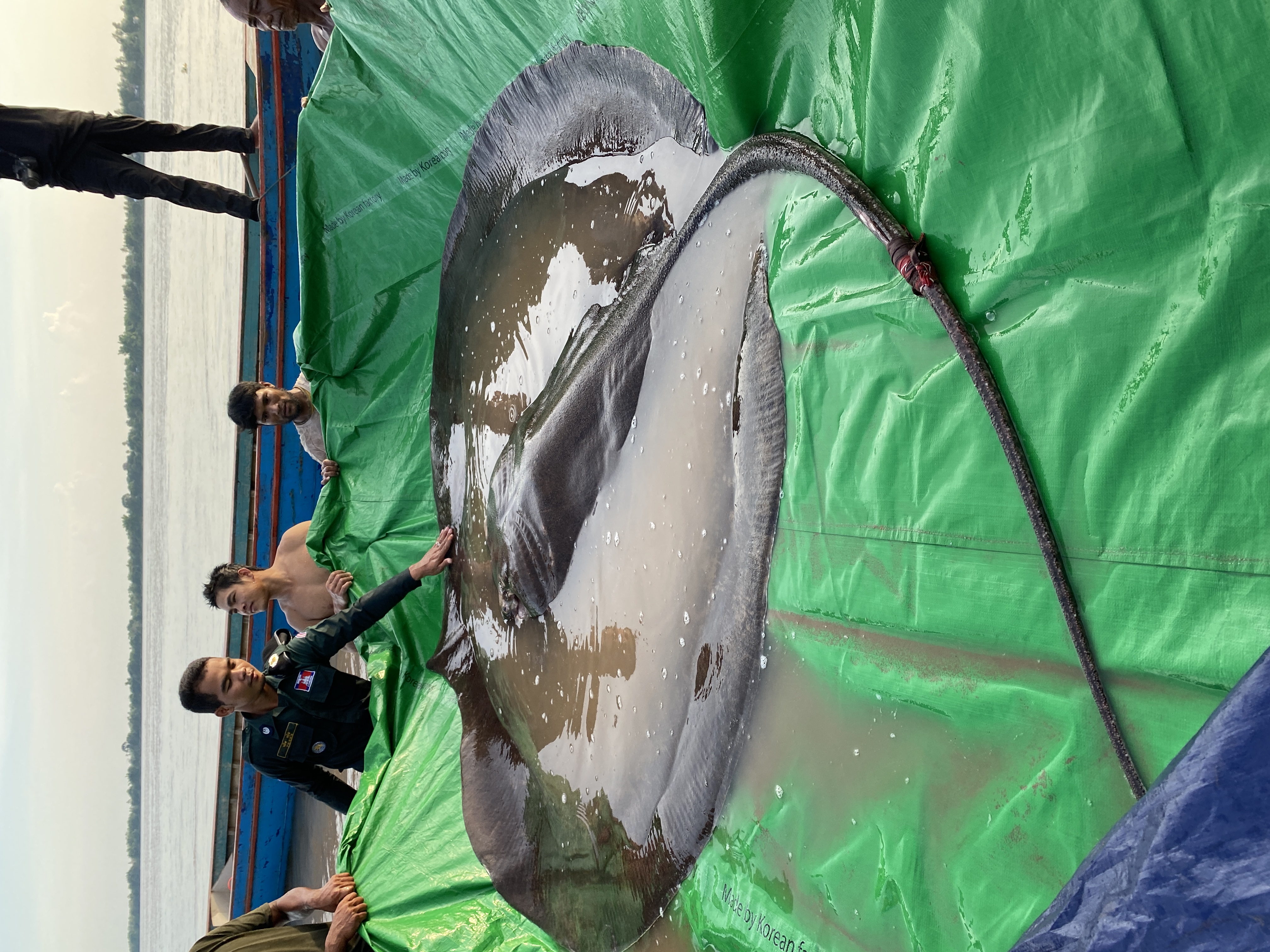
The question that opens the book proved far harder to settle than either author expected. The manuscript was finished, and still there was no answer. Then came a phone call from fishers on the Mekong in northeastern Cambodia, who had landed something extraordinary: a giant freshwater stingray, later named Boramy, weighing 661 pounds. There was just enough time to add an epilogue.
Boramy, the 661-pound giant freshwater stingray landed on the Mekong in Cambodia in 2022 and released alive — the largest freshwater fish ever recorded. Photo: Chhut Chheana
Praise
The final reveal is a satisfying conclusion.
Scientific American
Exceptionally informative, extraordinarily well organized and thoroughly reader friendly.
Midwest Book Review
The scientific material is accurate, admirable, and very thorough.
Gene S. Helfman — emeritus professor, Odum School of Ecology, University of Georgia
A truly significant contribution to world fisheries and ecosystem degradation understanding.
John W. Sigler — conservation ecologist, senior author of Fishes of Idaho
The authors
Zeb Hogan is a research biologist at the University of Nevada, Reno, and the United Nations Convention on Migratory Species scientific councilor for fish. His research focuses on migratory fish ecology, fisheries management and endangered species.
Stefan Lovgren is a journalist and filmmaker with more than 25 years of international reporting experience, writing on environmental issues with a focus on fish and freshwater. Chasing Giants is his fourth book.
Details
Publisher University of Nevada Press
Published April 2023
Pages 250
ISBN 978-1-64779-057-8
Recognition Nevada Center for the Book, Great Reads from Great Places, 2023
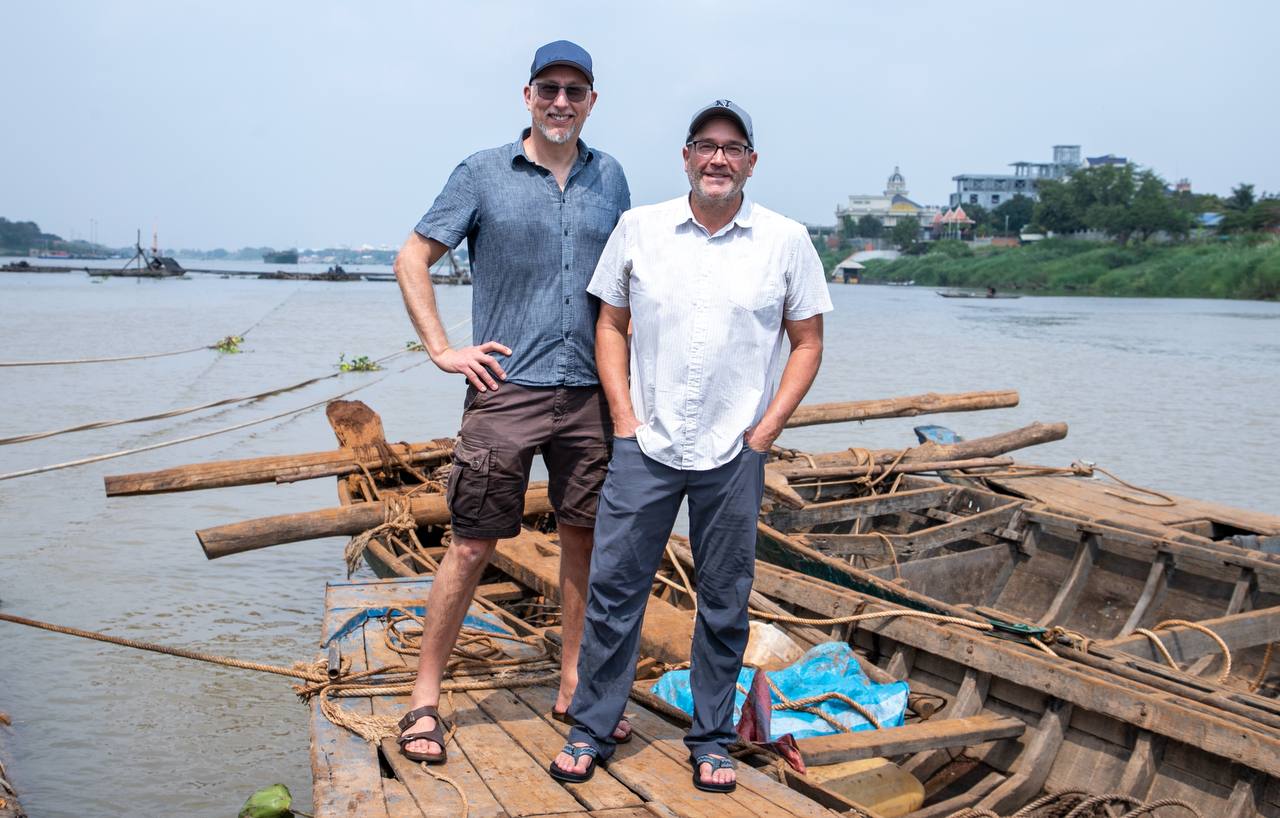
Stefan Lovgren, left, and Zeb Hogan on the Mekong.